

Geotechnical Engineering Laboratory
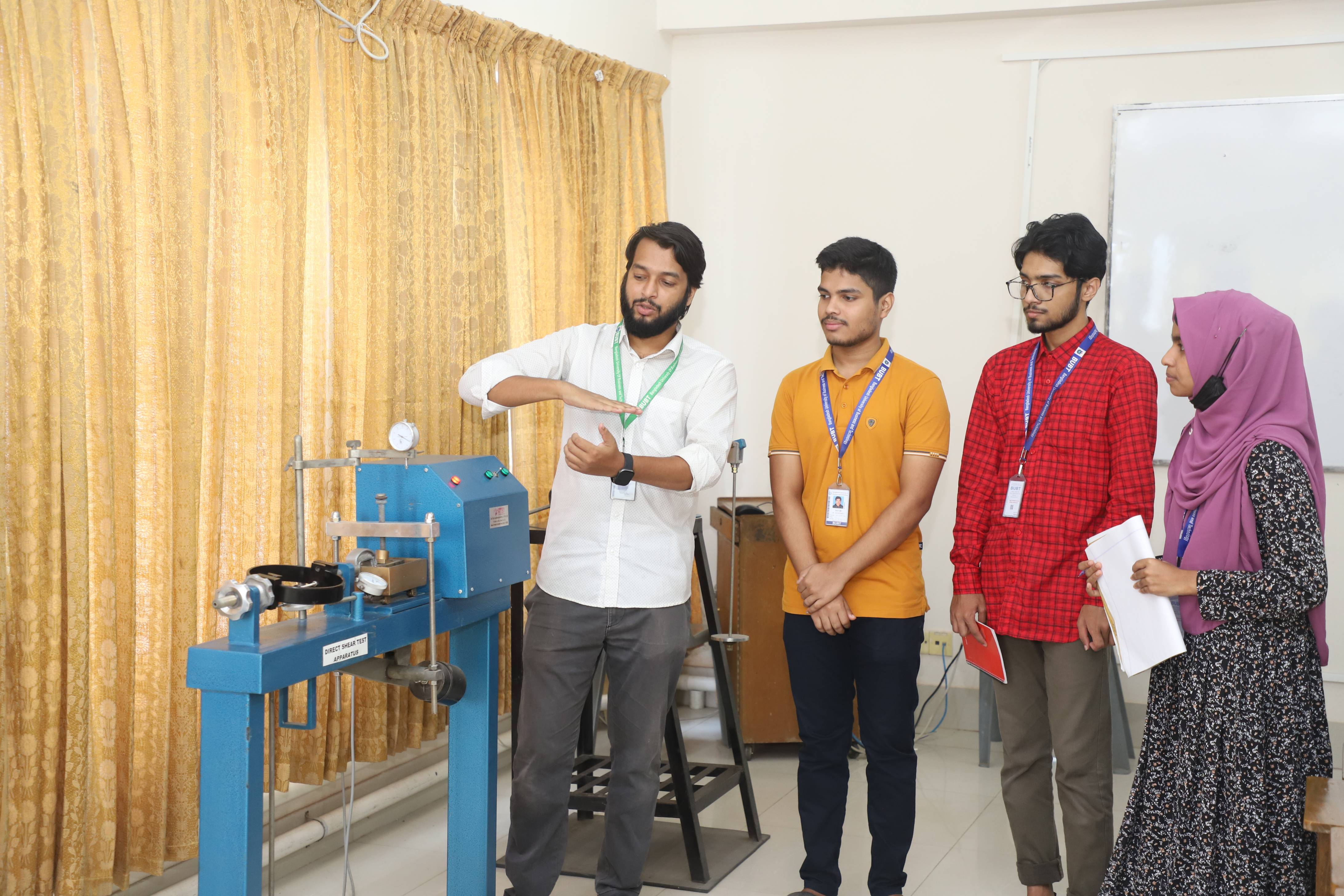
The Geotechnical Engineering Laboratory is a core undergraduate facility dedicated to evaluating the physical, index, and engineering properties of soils. Equipped with modern testing apparatus, it provides students with hands-on experience in assessing soil strength, compressibility, permeability, and compaction under various loading conditions. The laboratory bridges the gap between theory and practice for courses like Soil Mechanics, Geotechnical Engineering, and Foundation Engineering, while also supporting undergraduate research and industrial quality control testing.
About This Facility
Geotechnical Engineering Laboratory
Department of Civil Engineering | BUBT
📌 Overview
The Geotechnical Engineering Laboratory is one of the core undergraduate laboratories of the Department of Civil Engineering, dedicated to the experimental investigation of the engineering properties and behavior of soils. The laboratory is equipped with a wide range of modern testing equipment and apparatus, including facilities for compaction, shear strength, consolidation, permeability, triaxial, unconfined compression, and particle size analysis, as well as equipment for determining the index and physical properties of soils. It provides students with practical experience in conducting standard geotechnical tests, enabling them to evaluate the strength, compressibility, permeability, and classification characteristics of soils under different loading and environmental conditions. The laboratory reinforces the theoretical concepts taught in courses such as Soil Mechanics, Geotechnical Engineering, and Foundation Engineering, while also supporting undergraduate research, project work, and quality control testing in accordance with recognized engineering standards.
🎯 Objectives
- Familiarize students with standard laboratory procedures used to determine the physical, index, and engineering properties of soils.
- Provide hands-on experience in operating geotechnical testing equipment such as compaction, direct shear, consolidation, permeability, and unconfined compression test apparatus.
- Enable students to determine key soil properties, including shear strength, compressibility, permeability, compaction characteristics, moisture content, specific gravity, and particle size distribution.
- Develop a practical understanding of soil behavior under different loading, drainage, and environmental conditions relevant to civil engineering applications.
- Bridge the gap between theoretical knowledge and practical geotechnical engineering through laboratory investigations and standardized testing procedures.
- Train students in proper sample preparation, accurate data collection, interpretation of test results, and preparation of technical laboratory reports in accordance with recognized engineering standards.
🧪 Major Experiments
- Field Identification Tests of Soils
- Specific Gravity Test of Soil
- Relative Density Test
- Grain Size Analysis by Sieve Method
- Grain Size Analysis by Hydrometer Method
- Atterberg Limit Tests (Liquid, Plastic, & Plasticity Index)
- Standard Proctor Compaction Test
- Direct Shear Test
- Unconfined Compression Test
- Falling Head Permeability Test
- Consolidation (Oedometer) Test
📋 Machine Inventory
| Item Name | Qty |
|---|---|
| Unconfined Compression Test Machine | 1 Set |
| Direct Shear Test Machine | 1 Set |
| Triaxial Compression Test Apparatus | 1 Set |
| Consolidation (Oedometer) Test Machine | 1 Set |
| Permeability Test Apparatus | 1 Set |
| Proctor Compaction Test Apparatus | 1 Set |
| Expansion Index Test Apparatus | 1 Set |
| Casagrande Liquid Limit Apparatus | 1 Set |
| Shrinkage Limit Test Apparatus | 1 Set |
| Linear Shrinkage Test Apparatus | 1 Set |
| Sieve Shaker Machine | 1 Set |
| Electric Drying Oven (120 L) | 1 Set |
🛠️ Major Equipment Details & Functions
| Sl. | Equipment | Functional Description |
|---|---|---|
| 1 | Unconfined Compression Test Machine | Used to determine the unconfined compressive strength and undrained shear strength of cohesive soils. |
| 2 | Direct Shear Test Machine | Determines the shear strength parameters (cohesion and angle of internal friction) of soils under direct shear loading. |
| 3 | Triaxial Compression Test Apparatus | Evaluates the strength and stress–strain behavior of soils under controlled confining pressure and drainage conditions. |
| 4 | Consolidation (Oedometer) Test Machine | Measures the compressibility and settlement characteristics of cohesive soils under incremental loading. |
| 5 | Permeability Test Apparatus | Determines the coefficient of permeability (hydraulic conductivity) of soil specimens using standard laboratory methods. |
| 6 | Proctor Compaction Test Apparatus | Determines the optimum moisture content (OMC) and maximum dry density (MDD) of soils for field compaction. |
| 7 | Sieve Shaker Machine | Performs particle size distribution analysis of coarse-grained soils using a standard sieve set. |
| 8 | Electric Drying Oven (120 L) | Dries soil samples at controlled temperature for moisture content determination and sample preparation. |
| 9 | Casagrande Liquid Limit Apparatus | Determines the liquid limit of fine-grained soils for soil classification and consistency evaluation. |
| 10 | Hydrometer Test Set | Determines the particle size distribution of fine-grained soils that cannot be analyzed by sieve analysis. |
| 11 | ASTM Standard Sieve Set | Separates soil particles into different size fractions for grain size analysis and soil classification. |
| 12 | Sensitive Electronic Balance | Measures the mass of soil samples and laboratory materials with high precision for accurate test results. |
| 13 | Pycnometer Set | Determines the specific gravity of soil solids, an essential parameter for soil characterization. |
| 14 | Soil Trimmer | Prepares cylindrical soil specimens with accurate dimensions for strength and permeability testing. |
| 15 | Soil Ejector | Removes compacted soil specimens safely from molds without disturbing their shape or structure. |
| 16 | Standard & Modified Proctor Hammers | Provide controlled compaction energy during Standard and Modified Proctor compaction tests. |
| 17 | Proctor Compaction Mold | Holds soil specimens during compaction tests to determine compaction characteristics. |
| 18 | Expansion Index Test Apparatus | Evaluates the expansion potential of expansive soils when exposed to moisture. |
🎓 Learning Outcomes
Upon successful completion of this laboratory course, students will be able to:
- Apply standard laboratory testing methods to determine the physical, index, and engineering properties of soils.
- Operate geotechnical laboratory equipment safely and accurately to perform soil classification, compaction, strength, permeability, and consolidation tests.
- Analyze and interpret experimental data to evaluate soil behavior, including shear strength, compressibility, permeability, and compaction characteristics.
- Classify soils and assess their suitability for various civil engineering applications based on laboratory test results and relevant engineering standards.
- Compare experimental findings with theoretical concepts, identify potential sources of error, and evaluate the reliability of test results.
- Prepare clear, accurate, and well-organized laboratory reports by presenting observations, calculations, analyses, and engineering interpretations in a professional format.
Location
Room: 807 Floor: 8, Building: 3, BUBT Main Campus
Capacity
30 Students
Equipment
Unconfined Compression Test Machine, Direct Shear Test Machine, Triaxial Compression Test Apparatus, Consolidation (Oedometer) Test Machine, Permeability Test Apparatus, Proctor Compaction Test Apparatus
Other Facilities in Department of Civil Engineering
Laboratory Facilities
Our department features seven specialized labs complemented by interdisciplinary access to Physics,...
View Details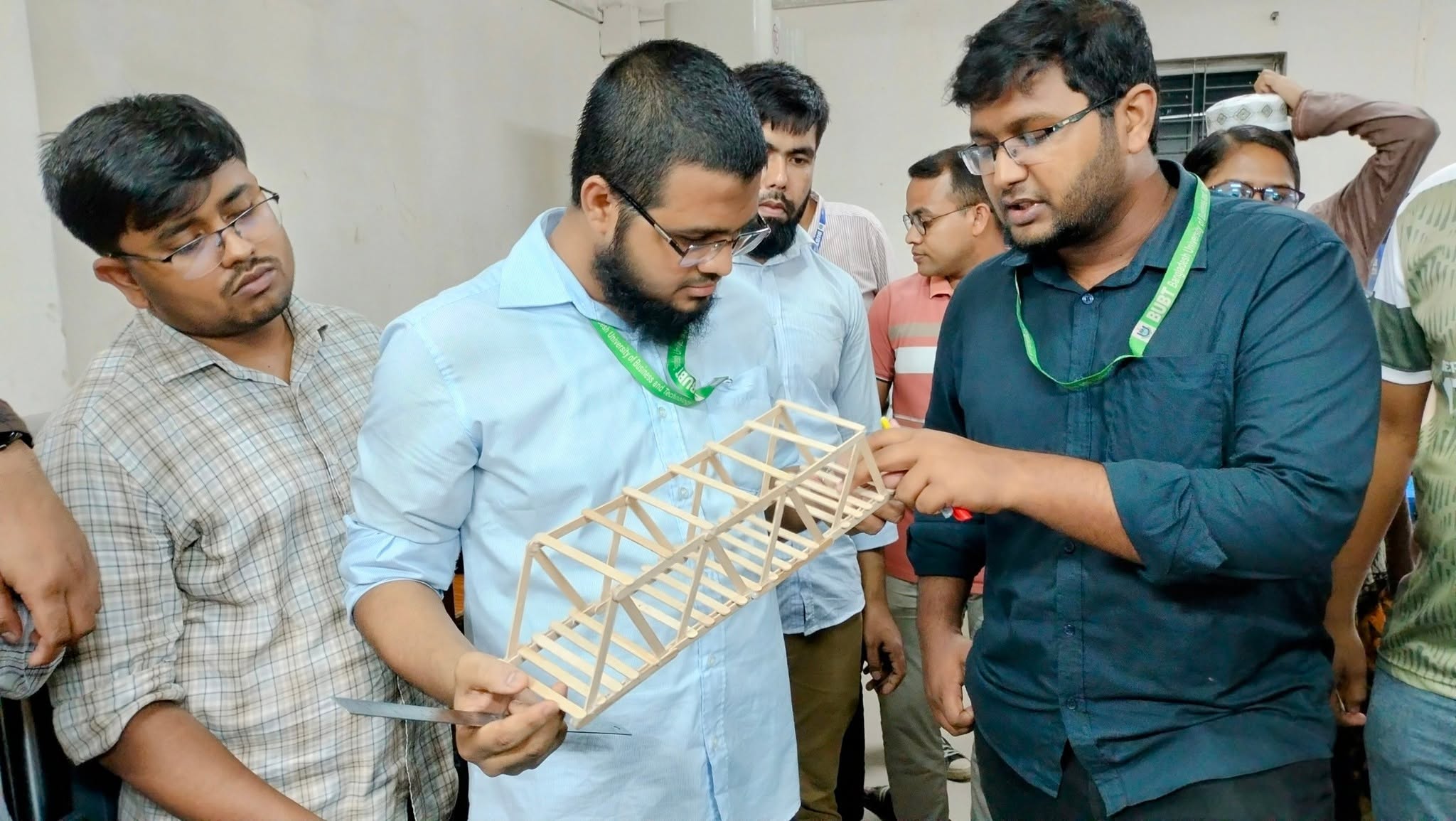
Structural Mechanics Laboratory
Located in Building 1, this lab features a 1000 kN Universal Testing Machine for strength testing st...
View Details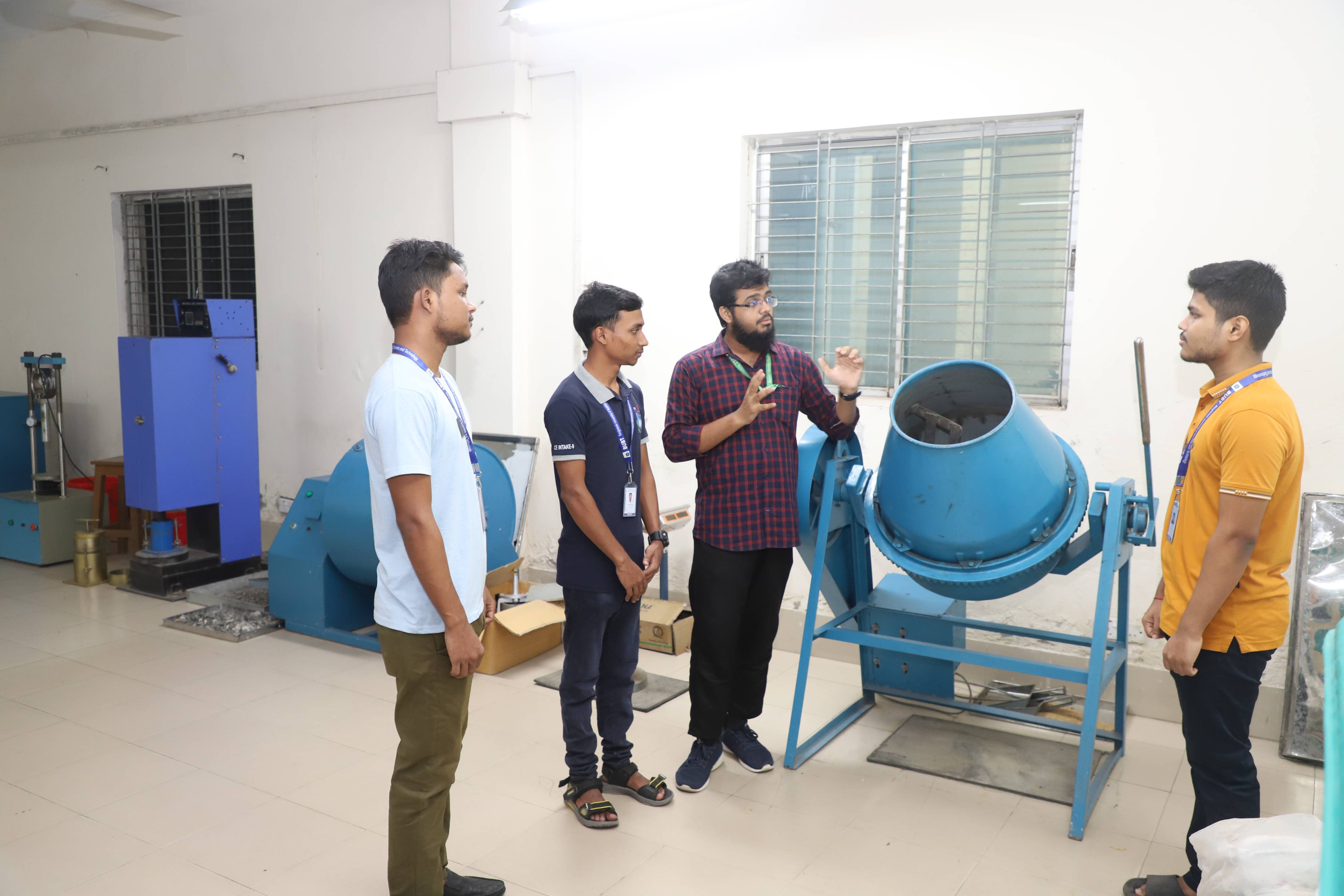
Engineering Materials Laboratory
Located on the ground floor of Building 1, this spacious facility is fully equipped for casting stru...
View DetailsCareer Opportunities
The Department of Civil Engineering at BUBT offers excellent career opportunities for graduates in t...
BUBT Civil Engineering Club
The BUBT Civil Engineering Club aims to enhance students' academic, professional, and personal devel...
View Details
Water Resource Engineering Laboratory
The Water Resources Engineering (WRE) Laboratory is a core undergraduate facility focusing on the ex...
View DetailsNeed More Information?
For more details about this facility or to schedule a visit, please contact the department.